If you need a squid game season 2 episode breakdown, the main thing to know is this: the season is less about repeating the original tournament and more about watching Gi-hun walk back into a system that has already planned around him. Across seven episodes, the story moves from investigation to renewed games, then to votes, divided players, hidden manipulation, and a rebellion that ends badly.
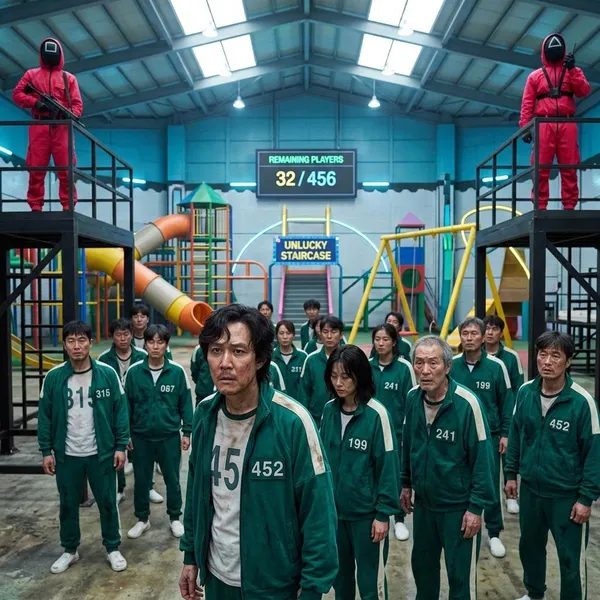
What happens in each Season 2 episode?
Season 2 works best if you track it in three parts: Gi-hun's search outside the arena, his return as a player, and the collapse of his attempt to fight back from inside. If you are refreshing your memory before Season 3, focus first on Player 001, the voting split, Jung-bae, and Jun-ho's unfinished search.
| Episode | What to remember | Why it matters |
|---|---|---|
| Episode 1: Bread and Lottery | Gi-hun hunts the organization, and the recruiter becomes a much larger presence. | The season starts by showing that Gi-hun's money has not freed him from the games psychologically. |
| Episode 2: Halloween Party | Gi-hun is drawn back toward the competition, while No-eul's storyline opens up the guard side. | The games are no longer shown only through contestants; the machine has workers, recruiters, and layers of control. |
| Episode 3: Red Light, Green Light returns | Gi-hun tries to warn the new players during a familiar game. | Knowing what will happen is not enough when scared people do not trust you. |
| Episode 4: The six-legged pentathlon | A team game forces players to rely on coordination, patience, and trust. | The season starts testing alliances instead of only individual survival instincts. |
| Episode 5: The vote, tensions, and shifting loyalties | The players split over whether to continue or stop. | The voting system turns desperation into conflict and makes the players help sustain the game. |
| Episode 6: Betrayals deepen as the next game unfolds | Fear, selfishness, and suspicion make cooperation harder. | The rebellion begins to feel emotionally necessary but practically fragile. |
| Episode 7: Rebellion, losses, and the final confrontation | Gi-hun's uprising fails, the Front Man reasserts control, and Jung-bae is killed. | The season ends with Gi-hun alive but psychologically crushed. |
For a casual viewer, the important shift is simple: Season 1 asked whether Gi-hun could survive. Season 2 asks whether survival knowledge can be turned into resistance. The answer, at least by the finale, is no—not because Gi-hun lacks courage, but because the organizers understand fear, trust, and timing better than he does.
If you are deciding whether to rewatch the whole season or just key parts, Episodes 3, 5, and 7 carry the most important plot weight. Episode 3 restarts the arena story, Episode 5 explains why the players fracture, and Episode 7 locks the season into its Season 3 setup.
What are the biggest Season 2 twists?
The biggest twists are not isolated shock moments. They all point in the same direction: Gi-hun thinks he has entered the games with more control than before, but the system has moved closer to him than he realizes.
The Front Man joins as Player 001
The major twist is that In-ho, the Front Man, enters the competition as Player 001. The number deliberately echoes Season 1, but the purpose is sharper this time: he is not just hiding in the game, he is managing Gi-hun from inside it.
That changes how earlier scenes play. Any moment of agreement, hesitation, or support from Player 001 becomes suspicious in hindsight because he is close enough to influence Gi-hun's choices without looking like an outside controller.
Gi-hun unknowingly trusts his enemy
Gi-hun's mistake is not stupidity. He returns with a strong moral purpose, and that makes him eager to find people he can work with. In-ho exploits exactly that need.
The votes divide the players
The voting system looks fair on the surface because it gives the contestants a choice. In practice, it makes them argue over whether more deaths are worth more money.
- Players who want out see the vote as the last moral line.
- Players who want to continue treat the growing prize as a reason to endure one more round.
- Gi-hun sees both sides becoming trapped by the rules the organizers designed.
The rebellion falls apart
The rebellion fails because it begins from desperation, not strength. The players have courage, but they are tired, divided, scared, and still unsure who can be trusted.
That makes the failure feel less like a random defeat and more like the result of earlier damage. The season spends time showing fractured votes and unstable alliances so the uprising does not feel clean or heroic when it finally starts. It feels brave, rushed, and doomed.
Jung-bae is killed in front of Gi-hun
Jung-bae's death is the most personal blow of the finale. He matters because he connects Gi-hun to a life outside the games, not just to another temporary alliance inside them.
The Front Man uses that connection deliberately. Killing Jung-bae in front of Gi-hun turns a failed rebellion into a targeted punishment, making the ending feel less like a cliffhanger and more like an emotional execution.
Who matters most in Season 2?
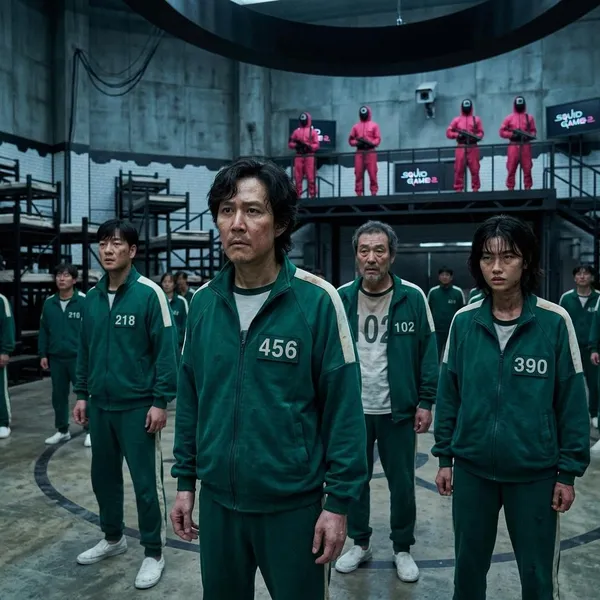
The most important characters are Gi-hun, In-ho, Jun-ho, and No-eul, with the new players shaping the social pressure inside the arena. A useful way to read the season is to separate them by function: Gi-hun resists from inside, In-ho controls from inside, Jun-ho searches from outside, and No-eul reveals how the guard system works.
Gi-hun returns to stop the games
Gi-hun is no longer the desperate gambler of Season 1. He enters Season 2 with money, trauma, and a mission: find the people behind the games and stop them.
His strength is also his blind spot. He assumes that if he tells people the truth clearly enough, they will understand the danger and act together. Season 2 keeps proving that fear, pride, debt, and mistrust can overpower even accurate warnings.
In-ho manipulates Gi-hun from inside
In-ho is dangerous because he does not need to control every player at every moment. He only needs to be close enough to steer the moments that matter.
As Player 001, he can watch Gi-hun's reactions, encourage or soften the right conversations, and let the group's existing divisions do much of the work. If Gi-hun represents moral urgency, In-ho represents patient control.
Jun-ho searches for the island
Jun-ho's storyline is slower, but it matters because it keeps the outside world in play. He is looking for the island, evidence, and a way back into a system that is built to disappear.
No-eul reveals the guard side of the games
No-eul gives Season 2 one of its most useful expansions. Through her, the guards stop being only masked figures and become part of a wider system that recruits desperate people into different roles.
That does not excuse what the guards do. It does make the world more unsettling, because the show suggests the machine survives by exploiting people above and below the players, not only the contestants in tracksuits.
New players reshape the alliances
The new contestants matter because they stop Season 2 from becoming only Gi-hun versus the organization. Hyun-ju, Myung-gi, Thanos, Jung-bae, and others create different kinds of pressure: steadiness, ego, panic, loyalty, and selfishness.
- If you are tracking alliances, watch who stays calm during team pressure.
- If you are tracking betrayals, watch who changes position when money or fear rises.
- If you are tracking Gi-hun's failure, watch how often people agree with him emotionally but still act against his larger goal.
That last point is easy to miss on a first watch. Gi-hun does not lose influence only because people dislike him; he loses it because many players are making smaller, immediate survival choices that clash with his bigger plan.
How does Season 2 end?
Season 2 ends with Gi-hun's rebellion failing, the Front Man back in control, Jung-bae dead, and the surviving players still trapped. It is not a clean finale; it is a hard stop that leaves the main conflict open for Season 3.
Gi-hun's rebellion fails
Gi-hun rebels because he finally understands that helping people survive individual rounds will not end the games. The structure itself has to be challenged.
The problem is timing. By the time the rebellion forms, the players are already divided by votes, fear, grief, and suspicion. It is a low-odds move made by people with almost no good options left.
The Front Man regains control
The Front Man regains control by proving that Gi-hun's resistance was never as hidden or as strong as Gi-hun hoped. He has allowed opposition to form just long enough to expose it.
That is what makes him frightening in Season 2. He is not simply a masked authority figure issuing orders. He understands how rebellion feels from the inside and knows how to let hope become evidence.
Jung-bae's death breaks Gi-hun
Jung-bae's death breaks Gi-hun because it turns the failure of the rebellion into a personal punishment. Gi-hun wanted to save people this time; instead, he is forced to watch someone close to him die.
The scene also resets Gi-hun emotionally for Season 3. He is not just angry now. He has been humiliated, manipulated, and made to feel responsible for the cost of resisting.
The surviving players remain trapped
The surviving players do not escape at the end of Season 2. They remain inside a game that has just crushed an open revolt, which makes their situation worse than a normal cliffhanger.
If you are watching mainly to know whether the season resolves the competition, it does not. The ending leaves the remaining contestants in danger and makes Season 3 feel like the second half of the same conflict rather than a separate restart.
The ending leads directly into Season 3
The finale points straight toward Season 3 because the major forces are still active: Gi-hun is alive, the Front Man remains in control, Jun-ho's search is unresolved, and the players are not free.
For a quick rewatch before the next season, the ending tells you what to carry forward: Gi-hun now knows the fight is more personal, In-ho has shown how far he will go, and the games have survived their first serious internal challenge.
Conclusion
Squid Game Season 2 is at its strongest when viewed as a season about failed resistance rather than another simple survival contest. The episode arc matters because it shows Gi-hun trying to turn trauma into action, only to discover that the Front Man has already learned how to use trust, votes, and personal attachment against him.