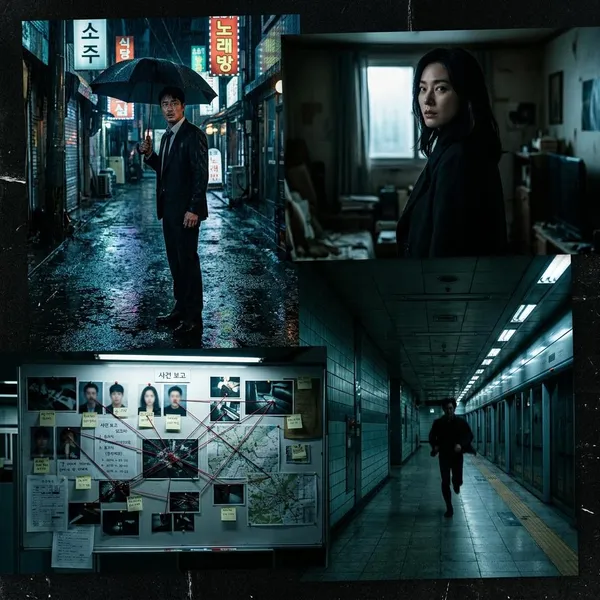
If you are checking whether the blood korean drama series is worth your time, the quick answer is this: Blood works best for viewers who like supernatural K-dramas with hospital politics, moral conflict, and a serious romance running through the suspense. It is not a pure medical drama and not a full horror story, so your enjoyment depends mostly on whether the vampire-surgeon premise sounds intriguing rather than too unusual.

What is the Blood Korean drama about
Blood is a 2015 Korean drama about Park Ji-sang, a talented surgeon who is also infected with a vampire-like condition. He works in a major hospital while trying to control his instincts, protect patients, and search for a way to live more normally.
The story becomes more than a secret-identity plot once the hospital itself turns suspicious. Hidden research, powerful doctors, and unsafe medical experiments pull Ji-sang into a conflict where saving lives and exposing the truth are not always easy to separate.
A vampire surgeon searching for a cure
Park Ji-sang is not written as a vampire who enjoys being powerful. His condition isolates him, forces him to stay controlled, and makes ordinary closeness risky. That is why his work as a surgeon matters: he is surrounded by blood, illness, and vulnerable patients while trying to prove through his actions that he is still a healer.
His search for a cure is partly physical, but it is also emotional. He wants a life where he does not have to treat every relationship as a possible danger. For viewers who like restrained, lonely male leads, this is the part of Blood that usually lands best.
A hospital hiding dangerous experiments
The hospital is not just the setting; it is the pressure cooker. On the outside, it looks like a place of treatment and research. Underneath, the drama builds suspicion around hidden projects, medical ambition, and people who treat ethical limits as obstacles.
A romance caught in the conflict
The romance between Ji-sang and Yoo Ri-ta grows out of friction, curiosity, and reluctant trust. Ri-ta is direct and sharp, while Ji-sang is careful and closed off, so their relationship does not begin as an easy comfort zone.
If you watch mainly for romance, expect it to share space with conspiracy and fantasy. If you enjoy couples who become closer while investigating secrets and facing danger, the relationship has more to offer than a standard hospital love line.
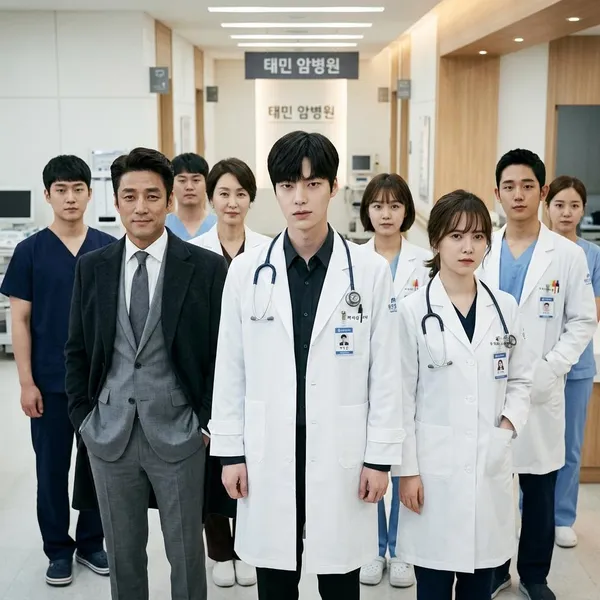
Blood Korean drama cast and characters
The lead trio carries the drama: Ji-sang is the controlled outsider, Ri-ta is the bold doctor who keeps pushing toward the truth, and Lee Jae-wook is the polished authority figure whose calmness makes him more dangerous. Their roles are clear, which helps even when the plot becomes busy.
Ahn Jae-hyun as Park Ji-sang
Ahn Jae-hyun plays Ji-sang with a cold, quiet distance that fits the character's constant self-control. His performance works best in scenes where Ji-sang is isolated, morally pressured, or trying not to show how much he is struggling.
Some viewers may find the restraint too stiff in emotional moments. If you prefer highly expressive acting, that may be a drawback. If you like a lead who suffers silently and reveals himself slowly, Ji-sang is easier to connect with.
Ku Hye-sun as Yoo Ri-ta
Yoo Ri-ta is confident, privileged, talented, and sometimes abrasive at first. Ku Hye-sun plays her as someone who does not quietly accept distance or half-answers, which is important because the story needs a character willing to challenge Ji-sang and question the hospital.
Her appeal depends on your tolerance for strong, blunt female leads. In a lighter drama, that personality might feel exaggerated; in Blood, it gives the romance and investigation more movement.
Ji Jin-hee as Lee Jae-wook
Ji Jin-hee gives Lee Jae-wook the kind of calm villainy that suits a hospital conspiracy. He does not need to look chaotic or openly cruel all the time, because his power comes from status, intelligence, and the ability to hide dangerous motives behind professional authority.
- Best reason to watch him: he makes the medical conspiracy feel organized and threatening.
- What he adds: a clear moral opposite to Ji-sang's restraint.
- Viewer fit: stronger for fans of strategic antagonists than loud, action-heavy villains.
The main conflict in Blood
The central conflict has three moving parts: Ji-sang is fighting his own nature, Ri-ta is trying to uncover what the hospital is hiding, and Jae-wook is pushing dangerous research under the cover of medicine. The drama is most interesting when these three conflicts collide instead of sitting in separate storylines.
Ji-sang's struggle to control his vampirism
Ji-sang's conflict is not just "hide the secret." He has to keep working around patients while managing a condition that could make him dangerous. That gives his self-control a practical edge: one mistake could hurt someone, damage his career, and expose what he is.
The drama uses him to ask whether humanity is about biology or behavior. Ji-sang may be physically different, but his discipline and compassion often look more human than the choices made by people around him.
Ri-ta's fight to uncover the truth
Ri-ta's investigation gives the story another active force. She is not simply waiting for Ji-sang to confess everything; she notices gaps, tests what she is told, and pushes into places where curiosity becomes risky.
This matters especially if you dislike romances where one character only reacts. Ri-ta's choices affect the mystery, the hospital politics, and her relationship with Ji-sang.
Jae-wook's dangerous medical experiments
Jae-wook's experiments are the clearest external threat in Blood. They turn the hospital from a place of care into a place where ambition can be disguised as progress.

The main themes in Blood
The main themes in Blood are easy to spot, but they work best when seen through the characters rather than as abstract ideas. The drama keeps returning to three questions: what makes someone human, how far medicine can go before it becomes abuse, and whether love can push people toward better choices.
Humanity versus immortality
Immortality in Blood is not treated as a simple gift. Ji-sang's longer life and unusual abilities come with secrecy, loneliness, and constant discipline. The drama repeatedly suggests that being human is less about the body and more about restraint, empathy, and responsibility.
Medical ethics and human testing
The medical ethics theme is one of the strongest reasons the hospital setting works. Patients enter hospitals expecting care, not hidden agendas, and Blood uses that trust to make the experiments feel more disturbing.
A useful way to read this part of the drama is as a warning about power without accountability. The series does not need to be medically realistic in every detail for that concern to feel recognizable.
Love, sacrifice, and redemption
Love in Blood is tied to risk. Ji-sang getting closer to Ri-ta means exposing parts of himself that could endanger both of them, while Ri-ta's trust in him pulls her deeper into the hospital's secrets.
Redemption gives the emotional side more room. Characters are often judged not only by what they have done, but by whether they are willing to change course when the cost becomes real.

Where to watch Blood
Streaming availability for Blood can change by country, so it is worth checking legal platforms before assuming it is unavailable. Because the title is very broad, search with "Blood 2015 Korean drama" or the Korean network name to avoid unrelated movies and shows.
Check KBS World and Viki
KBS World and Viki are the two most sensible places to check first. Blood originally aired on KBS, and Viki often carries older Korean dramas with international subtitle options, though availability can vary.
- Search with the year: use "Blood 2015" to avoid unrelated titles.
- Check subtitles first: medical and mystery scenes lose impact with poor translation.
- Confirm your region: a listing may appear even when streaming is blocked locally.
- Look for full episodes: clips or partial uploads can make the plot confusing.
Conclusion
Blood is worth trying if you want a K-drama that mixes vampire fantasy with hospital secrets, ethical tension, and a romance shaped by danger rather than comfort. It is less ideal for viewers who want a realistic medical series or a light love story, but for the right mood, its unusual premise and darker moral conflict make a few episodes a fair test.