The best korean family drama series depends on what kind of comfort watch you want: a warm long weekend drama, a nostalgic neighborhood story, or a heavier parent-child conflict with real emotional payoff. If you are new to the genre, start with My Father Is Strange or Once Again; if you want something shorter and more universally loved, choose Reply 1988.
Best Korean family drama series
Family dramas are easier to choose when you match the title to your mood instead of only looking for the most famous one. Some are perfect for a slow weekend watch over several weeks, while others work better if you want a shorter, emotionally rich drama without committing to 50 episodes.
My Father Is Strange for family secrets and comedy
My Father Is Strange is one of the safest starting points because it has the classic long-family-drama feeling without becoming too heavy too quickly. A celebrity actor enters the life of an ordinary family, and the mystery around that connection gives the show momentum while the siblings, parents, and romances keep it warm.
Once Again for divorce and second chances
Once Again is better when you want adult problems rather than only youthful romance. The story follows siblings dealing with failed marriages, career disappointments, and the uneasy feeling of returning to the family home after life has not gone as planned.
The main reason to watch is the way it treats divorce and reconciliation as a process, not a single dramatic apology. If you enjoy seeing people slowly become kinder, more honest, or simply less stubborn, this is one of the most rewarding long family dramas.
Reply 1988 for family and neighborhood nostalgia
Reply 1988 is the best pick here for viewers who want the emotional heart of a family drama but not the full weekend-drama length. It follows several families in one neighborhood, so the warmth comes from shared meals, noisy homes, parent-child misunderstandings, and neighbors who feel almost like relatives.
Five Enough for blended-family romance
Five Enough, also known as Five Children, is the title to choose if you want a romance that cannot be separated from parenting. Two adults fall in love after difficult first marriages, but the real question is whether their children, former partners, and extended families can adjust to the new shape of their lives.
Ojakgyo Brothers for family chaos and love
Ojakgyo Brothers suits anyone who likes a busy household with several romances moving at once. With four brothers in the family, the drama has enough personalities and conflicts to keep the long runtime active.
The appeal is not quiet realism so much as energetic family mess: sibling rivalry, romantic confusion, household pressure, and moments where everyone seems to be involved in everyone else's business. If you like older K-dramas with a broad cast and lively domestic chaos, it is an approachable pick.
Life Is Beautiful for a multigenerational story
Life Is Beautiful has a calmer, more reflective rhythm than many family dramas. Set around a large family on Jeju Island, it gives space to marriage, aging, duty, identity, and the way different generations understand love and responsibility.
Pick this when you are in the mood for a slower character drama rather than a hook-heavy series. It is also a better fit for viewers who appreciate mature conversations and emotional nuance more than constant cliffhangers.
My Daughter Seo-young for emotional family conflict
My Daughter Seo-young is the heavier option on the list. Its central father-daughter conflict is built on resentment, pride, and old wounds, so it is less of a cozy household comedy and more of an emotional family melodrama.
What defines a Korean family drama?
A Korean family drama puts family relationships at the center of nearly every major decision. Romance, work, money, marriage, divorce, and personal dreams still matter, but they are usually filtered through parents, siblings, children, in-laws, or the wider household.
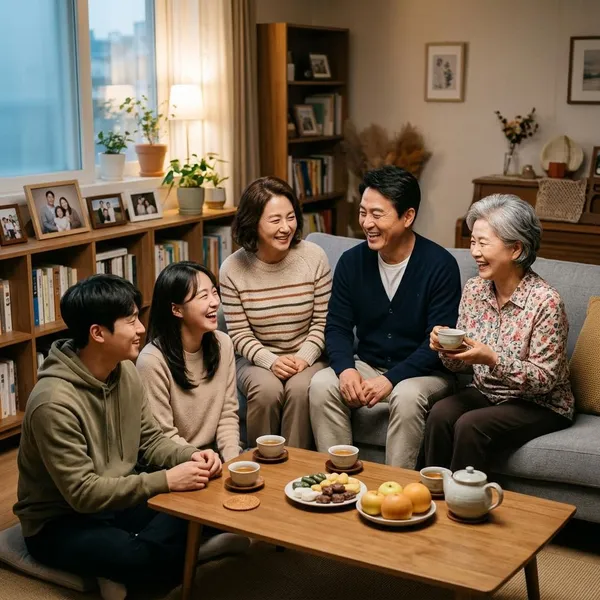
Several generations under one roof
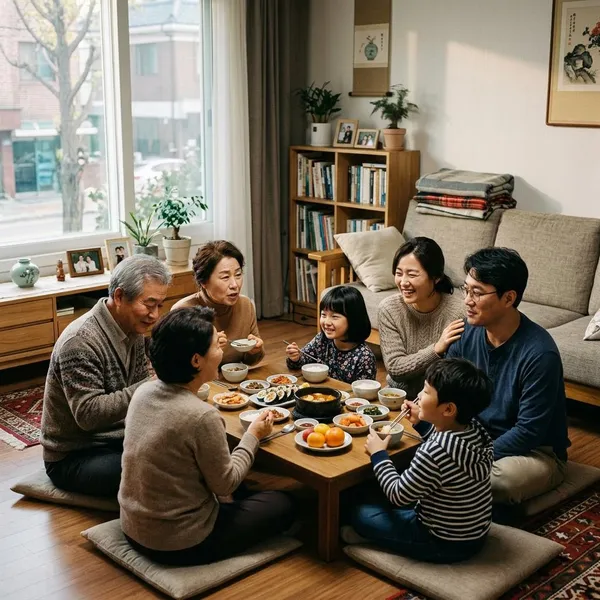
Many Korean family dramas use shared homes because they make conflict unavoidable. A young adult's career choice, a parent's disappointment, or a grandparent's old-fashioned opinion does not stay private for long when everyone eats at the same table.
This setup also creates the comfort viewers come for. Daily meals, small favors, scolding, gossip, and quiet concern make the family feel lived-in, even when the characters are arguing.
Connected family and romance plots
Romance in this genre rarely affects only the couple. A new relationship can raise questions about parental approval, remarriage, children from a previous marriage, financial pressure, or whether two families can actually live with each other's expectations.
That is why a blended-family drama such as Five Enough feels different from a standard romance. The romantic decision is also a household decision.
Everyday conflict between parents and children
The strongest family dramas often turn ordinary disagreements into emotional turning points. Marriage pressure, career disappointment, sibling comparison, and money stress can feel more powerful than a huge plot twist because the tension has usually been building for years.
Slow growth across many episodes
Character change is usually gradual. Someone may apologize, make the same mistake again, face consequences, and only later show real growth through different behavior.
A mix of comedy and emotion
Family dramas often work because the funny scenes make the sad ones hurt more. Sibling teasing, nosy relatives, and household misunderstandings build affection before the drama asks you to care about grief, regret, or reconciliation.
That tonal mix is also why many long family dramas feel easier to watch than their episode count suggests. The comedy gives you breathing room.
Why are Korean family dramas often so long?
Korean family dramas are often long because they are built for ensemble storytelling. Instead of asking one couple to carry the entire show, they follow parents, adult children, siblings, in-laws, grandparents, neighbors, and several relationships that change at different speeds.
Weekend broadcast schedules
Many classic family dramas were made for weekend viewing, when a broad household audience could watch together. That format encouraged steady pacing, clear emotional beats, and enough storylines for different generations to care about different characters.
Large ensemble casts
A large cast needs room. Parents may have one arc, each sibling may have another, and the love interests or in-laws often need enough development to feel like part of the family rather than outside plot devices.
This is also what makes long dramas rewatchable for some fans. When one storyline slows down, another couple, sibling, or parent-child conflict can take the lead.
Several connected storylines
Family drama plots overlap by design. A marriage can affect living arrangements, money, parenting, sibling jealousy, and a parent's sense of pride all at once.
That connected structure rewards patience. A scene that looks like a small argument early on may explain a much larger emotional decision later.
Slow relationship development
Longer episode counts allow relationships to change through repeated behavior instead of one dramatic speech. A father and daughter may need many small disappointments and gestures before trust starts to return; a remarried couple may need time to prove stability to their children.
Long family character arcs
The full appeal of the genre is often in watching people become slightly better, not suddenly different. A selfish sibling may learn responsibility, a strict parent may soften, or an estranged family member may return without everything being neatly fixed.
- For a casual viewer: start with a shorter or more comedic title before trying a 50-episode drama.
- For a long-term comfort watch: choose a weekend drama with a cast you enjoy spending time with.
- For emotional intensity: pick a title where the central family conflict is clear from the start.
Conclusion
The right family drama is the one that matches your patience and mood: Reply 1988 if you want a shorter nostalgic favorite, My Father Is Strange or Once Again if you want warm long-form comfort, and My Daughter Seo-young if you are ready for heavier emotional conflict. Once the family dynamic feels interesting, the longer runtime stops feeling like homework and starts feeling like time spent with people you actually want to check in on.