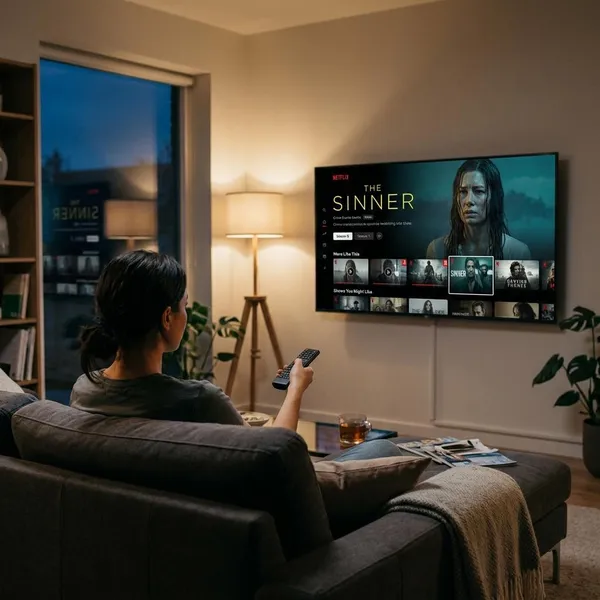
If you watch multiple episodes of the same TV series back to back, most people would call that binge-watching. There is no official episode count, so the better test is pace: are you moving through the same show much faster than a normal one-episode rhythm?
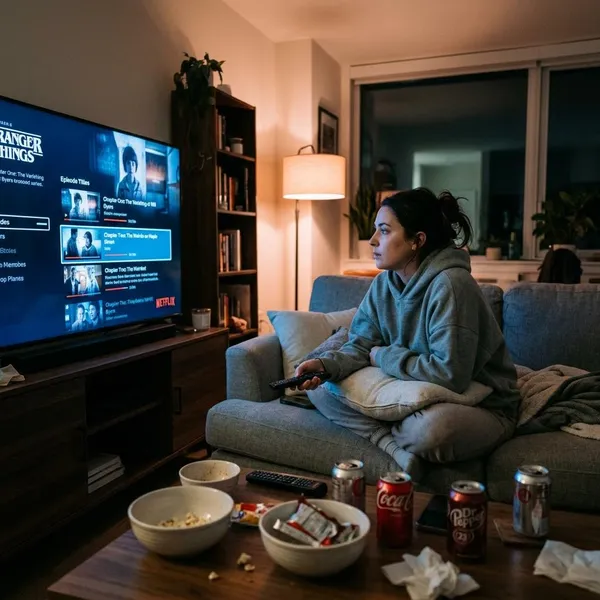
What makes a viewing session a binge?
A viewing session starts to feel like a binge when the same series becomes the main activity for an extended stretch. The clearest signs are simple: the episodes are consecutive, the gaps are short, and the usual waiting time between episodes has almost disappeared.
Episodes are watched consecutively
Back-to-back episodes are the easiest clue. If one episode ends and the next one starts right away, especially because a cliffhanger pulls you in, the session is no longer just casual viewing. It has become one continuous block of the same story.
Viewing happens in one sitting or a short period
A binge does not have to mean sitting frozen on the sofa for six hours. Watching episodes across one evening, a lazy Sunday, or a weekend can still count if the series stays at the center of your free time.
The same series is watched for an extended session
The "same series" part matters. Watching one comedy episode, half a documentary, and a random movie trailer is just a long screen session. Watching several chapters of one mystery, drama, anime, or reality season keeps you inside the same storyline, which is why it feels like binge-watching.
Normal episode-by-episode pacing is compressed
Traditional TV gave viewers time between episodes. Binge-watching removes most of that waiting, so plot twists, character changes, and emotional moments arrive close together. That can make a thriller more gripping, but it can also make a dense show feel heavier than it would at a slower pace.
How many episodes count as binge-watching?
There is no fixed rule, but the practical line is fairly easy to judge. Two episodes can be a small binge, three or more usually makes the label clearer, and a full season in a short window is hard to describe as anything else.
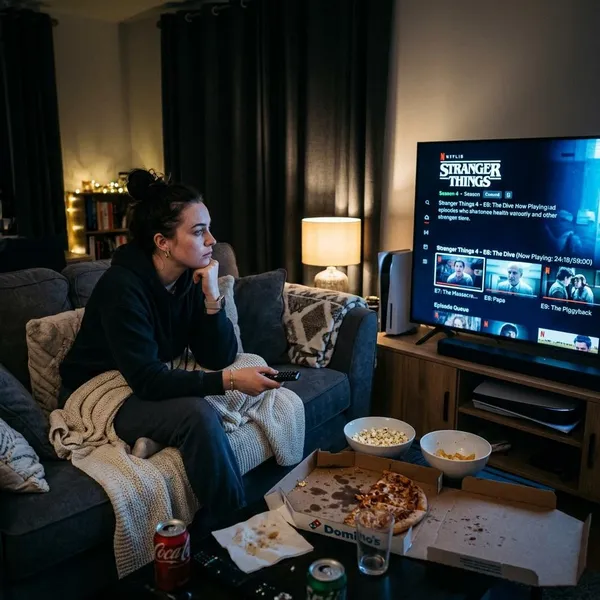
Two episodes can be a short binge
Two episodes can count, especially if they are long or tightly connected. A pair of hour-long crime drama episodes watched back to back feels different from casually playing two short sitcom episodes while making dinner.
Several episodes make the label clearer
Once you watch three, four, or more episodes in one run, most of the doubt disappears. At that point, you are not just "watching another episode"; you are spending a meaningful part of the day or evening inside the same show.
Episode length can change what feels like a binge
Episode length changes the judgment quickly. A good check is to look at total viewing time, not just the episode count.
- Short comedies: three 20-minute episodes may feel light and routine.
- Long dramas: two 60- to 70-minute episodes can already feel like a serious session.
- Dense documentaries: even a small number of episodes may be enough if they demand attention.
A full season is an obvious binge session
Watching a full season in one sitting, one day, or one weekend is an obvious binge. Even with normal breaks, you are compressing a large chunk of the show into a very short period.
The label becomes especially clear when you keep saying "one more episode," move through a major part of the season without planning to, or finish at a point where the show feels more like a long movie than separate installments.
What does not usually count as binge-watching?
Regularly watching a show is not automatically binge-watching. If the pace stays slow, spaced out, or controlled by a weekly release, the habit is usually better described as paced viewing.
Watching one episode at a time
One episode at a time usually does not count, even if you do it every night. That is a routine, not a binge. It can also be the better choice for complex shows where you want time to remember details and let each episode stand on its own.
Spacing episodes across several days
Watching one episode on Monday, another on Wednesday, and another at the weekend is normally just steady progress through a series. The wider the gaps, the less it feels like one continuous viewing session.
There is a gray area: five episodes across a single weekend may still feel like a binge, while the same five episodes spread across two weeks probably would not. The difference is how concentrated the viewing feels.
Following a weekly release schedule
A weekly release schedule is usually the opposite of binge-watching because the platform or broadcaster limits the pace for you. Even if you watch each episode the minute it drops, you are still following a slow, separated rhythm.
This can be a better fit if you enjoy anticipation, want to discuss theories with other viewers, or only have small pockets of free time. Bingeing gives momentum; weekly viewing gives space.
Conclusion
Watching multiple episodes of the same TV series in a short stretch usually counts as binge-watching, but the useful test is not a magic number. Start with the pace: if the episodes run together and the show takes over the session, the label fits; if you are watching one episode at a time with real gaps, it probably does not.