If you want an Australian western drama on Netflix, Territory is the one to start with: it is a modern cattle-station power struggle with family betrayal, land pressure, and Outback danger at the center. It is a good fit if you like shows about dynasties fighting to stay in control, but less ideal if you want a slow historical western or a clean hero-versus-villain story.
What is Territory about?
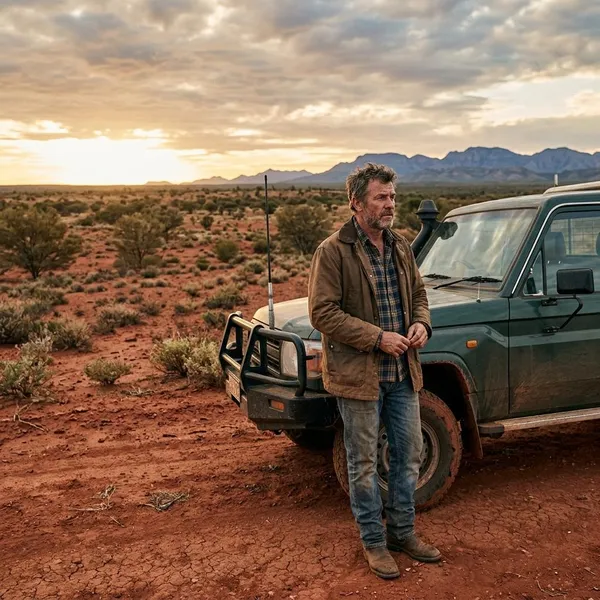
Territory follows the Lawson family, owners of the fictional Marianne Station, after their cattle empire loses its clear successor. That one break in the family line turns a private crisis into a fight over who gets to control the land, the business, and the Lawson name.
The first thing to know before watching is that the show is not only about inheritance paperwork. The station is the prize because it means money, status, local influence, and emotional ownership all at once. If you enjoy the business-and-family pressure of Yellowstone, this will feel familiar; if you mainly want shootouts and trail-riding, the drama is more political and family-driven than that.
The Lawson family loses its clear successor
The loss of a clear successor is the spark that makes the whole story unstable. Marianne Station has been treated like a dynasty, so once the future leader is no longer obvious, every old assumption starts to fall apart.
That matters because a property on this scale cannot drift for long. Family members start testing their own claims, workers need direction, and rivals read the uncertainty as weakness. The show uses that vacuum well: the danger is not only grief, but what people do when they see a powerful family hesitate.
Rival heirs fight for Marianne Station
The rival claims inside the Lawson family give the series its most personal tension. Some characters believe bloodline should decide the future; others seem more focused on who can actually keep the station alive under pressure.
Powerful outsiders move in on the land
Once the Lawsons look divided, outsiders see an opening. The pressure comes from several directions: business interests, competing land ambitions, criminal opportunists, and local figures who understand that Marianne Station is more than a family property.
This is the point where the show becomes bigger than a household feud. In a city drama, a family collapse might stay behind closed doors; in this setting, weakness changes the balance of an entire region.
Old family conflicts threaten the dynasty
The Lawsons are not only fighting over what happens next. They are paying for years of bad parenting, resentment, addiction, emotional distance, and pride. The succession crisis simply forces those problems into the open.
That is what makes the family drama work. A dynasty can still look strong from the outside while being hollowed out by the way its members treat each other. Territory keeps returning to that contrast: the land looks enormous, but the family holding it is fragile.
Who are the main characters in Territory?
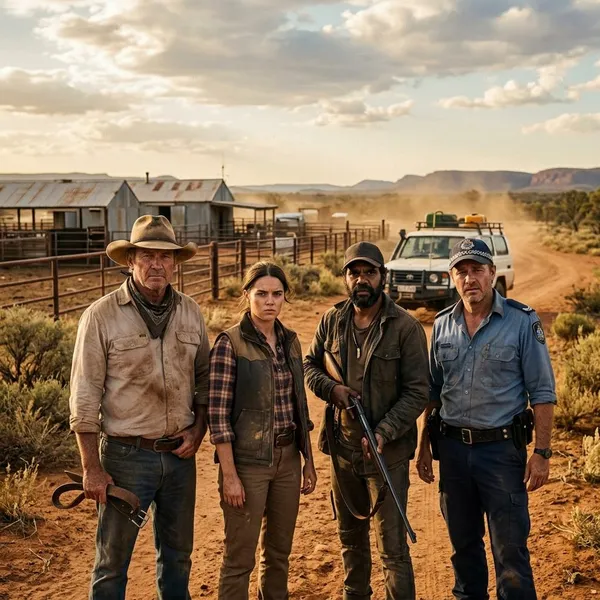
The main characters are mostly Lawsons, plus key figures whose lives and ambitions connect to Marianne Station. The show works best when you treat each character as a different answer to the same question: who really has the right, strength, or nerve to control the land?
Anna Torv as Emily Lawson
Anna Torv plays Emily Lawson, one of the sharpest people in the family orbit. Because Emily is tied to the Lawsons through marriage rather than birth, she can see the family myth from a slight distance, which often makes her more practical than the people who inherited it.
- Her role in the conflict: she reads power shifts quickly.
- Why she stands out: she brings restraint instead of loud dominance.
- Best reason to watch her scenes: she often understands the cost of a decision before others admit it.
Michael Dorman as Graham Lawson
Michael Dorman's Graham Lawson sits close to the center of the succession problem. He has a claim to the Lawson world, but his personal struggles make other characters question whether claim and leadership are the same thing.
Graham is useful to the drama because he makes inheritance feel risky rather than automatic. For a viewer, he is the character to watch if you are interested in how pressure, reputation, and weakness collide inside a powerful family.
Robert Taylor as Colin Lawson
Robert Taylor plays Colin Lawson, the patriarch whose authority still shapes the family even when that authority causes damage. Colin represents the old order: hard control, land ownership, reputation, and a style of leadership built more on force than warmth.
He is not just important because he gives orders. He explains the emotional climate that produced the crisis. The family's current instability feels more believable because Colin's version of power has clearly left marks on everyone around him.
Sam Corlett as Marshall Lawson
Sam Corlett's Marshall Lawson brings the next-generation tension into the story. He is not simply "the young one"; he shows what happens when a family legacy becomes something younger characters inherit before they are ready to carry it.
If you are watching for character volatility, Marshall is one of the names to track. His choices can feel impulsive, but they also expose the weak points in the Lawson system.
Clarence Ryan as Nolan Brannock
Clarence Ryan plays Nolan Brannock, a character who helps pull the story beyond the Lawson family's private problems. Nolan's presence is important because the Outback is not empty background space; it has communities, histories, claims, and tensions that existed before the latest Lawson power struggle.
That wider perspective keeps Territory from becoming just another rich-family drama with dustier scenery. Nolan helps make the setting feel lived-in rather than borrowed from a western template.
Why is Territory a neo-Western?
Territory is a neo-Western because it uses classic western ingredients in a modern Australian setting: contested land, family rule, local power, violent pressure, and survival far from comfortable institutions. The difference is that this is not a period piece and not an American frontier story. It is cattle country, mining pressure, helicopters, family money, and Outback isolation.
Land and legacy drive the conflict
Land is the real prize in Territory. Marianne Station matters because it carries money, family identity, and public proof that the Lawsons still have power.
Legacy makes that fight more emotional. Losing the station would not only be a business failure; it would tell everyone that the family could not protect the one thing that defined it. That is classic western material, even though the setting is modern Australia.
Cattle country replaces the American frontier
Australian cattle country fills the role that ranch land often plays in American westerns, but the texture is different. The scale is bigger, the distances feel harsher, and station life has its own language and routines.
For a viewer used to Montana-style ranch dramas, this is the most refreshing part of the show. Horses, cattle work, and hard country are still there, but the world does not feel copied and pasted from the United States.
Family power matters more than the law
One of the strongest neo-Western traits is the way reputation and family power often feel more immediate than formal systems. The law exists, but distance, money, intimidation, and local alliances shape what people can actually get away with.
This is also why the succession crisis is so dangerous. If the Lawson name has been acting like a stabilizing force, then a crack inside the family becomes a crack in the local order.
Violence and survival shape the story
Violence in Territory is not just decoration. It grows out of the stakes: valuable land, exposed weakness, old resentments, and rivals who know that polite negotiation will not always decide the outcome.
- Physical survival: the landscape and conflicts can put people in real danger.
- Family survival: the Lawsons are trying to keep their name intact.
- Social survival: characters need reputation and alliances, not just legal rights.
The Outback defines the show's identity
The Outback gives the series its scale and its mood. The wide landscapes make the Lawsons look powerful, but the same distance also makes mistakes more costly and help feel less immediate.
This is where Territory feels most specific. The Australian north is not interchangeable with another western backdrop. It shapes how people move, threaten, bargain, and survive, which is why the show works as an Australian neo-Western rather than a simple ranch-drama imitation.
Conclusion
Territory is worth trying if you want a tense Netflix drama where land, family, and power are tied together from the first episode. It is strongest when you watch it as a modern Outback succession story, not as a traditional western with Australian scenery. If that mix of dynasty politics, cattle-station scale, and rough neo-Western pressure sounds appealing, Marianne Station is a good place to spend a few episodes.